The Cyclospora outbreak’s latest evidentiary tension: On July 19, the FDA stated that a previously reported Cyclospora result 𝘴𝘩𝘰𝘶𝘭𝘥 𝘣𝘦 𝘤𝘰𝘯𝘴𝘪𝘥𝘦𝘳𝘦𝘥 𝘢 𝘧𝘢𝘭𝘴𝘦 𝘱𝘰𝘴𝘪𝘵𝘪𝘷𝘦. This prompts an understandable corporation relief and a renewed skepticism about statements from regulatory agencies.
Note: the FDA is still telling consumers, restaurants, and retailers not to touch the recalled lettuce. This is not necessarily a contradiction.
Separately, the FDA has also opened another Cyclospora investigation with 72 cases and no source identified and this strengthens the larger point: such investigations evolve in public and we cannot begin acting after all evidence is neatly settled.
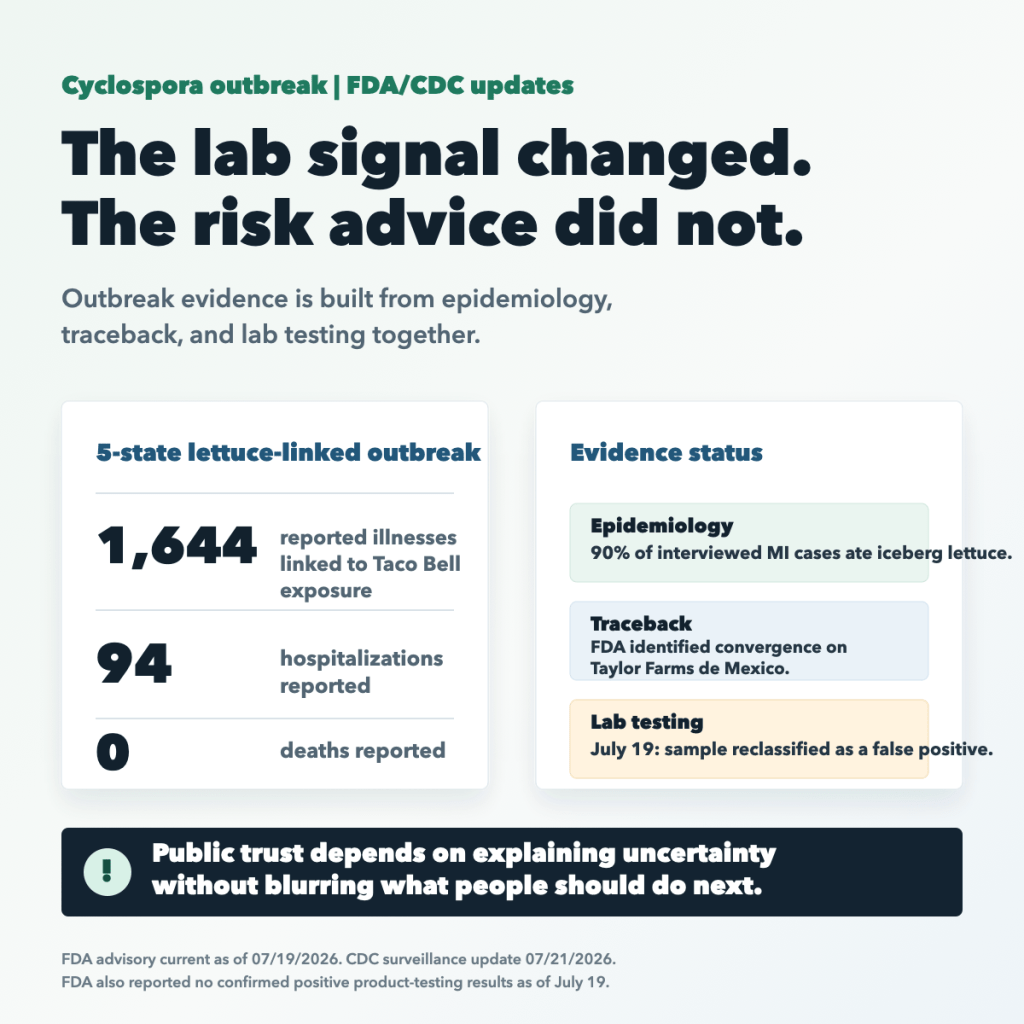
In outbreak investigations, we should not ignore circumstantial evidence like patient interviews, exposure patterns, supply-chain traceback, and timing.
So, there are lessons for everyone involved when communicating to the public:
Regulatory agencies risk losing public trust if they overstate early evidence and then disconfirming evidence presents itself.
Companies that over-celebrate a technical correction, they risk looking like they prioritize vindication over public safety.
Media coverage should resist oversimplification and hyperbolic headlines like “FDA got caught red-handed,” so that the public doesn’t miss how risk management actually works.
In matters of public health, evidence can be strong enough to justify action before it is clean enough to inspire broad public confidence.
References:
https://www.fda.gov/food/outbreaks-foodborne-illness/investigation-5-state-outbreak-cyclospora-illnesses-iceberg-lettuce-july-2026
https://www.wsj.com/health/healthcare/the-fda-is-investigating-a-new-cyclospora-outbreak-but-hasnt-identified-a-source-b6dfa6f9
https://www.cidrap.umn.edu/cyclospora/after-withdrawing-false-positive-test-fda-says-taylor-farms-lettuce-still-focus
https://www.cdc.gov/cyclosporiasis/php/surveillance/index.html

